
Disclaimer: Crypto is highly volatile and you could lose all your money, do your own research before investing.
Key Takeaways
- Despite widespread adoption, many critics still argue Bitcoin has no intrinsic value, likening it to a speculative bubble.
- Supporters believe Bitcoin’s value lies in its scarcity, decentralized nature, and resistance to censorship.
- The debate over intrinsic value stems from traditional economic definitions, which often clash with digital asset fundamentals.
- Bitcoin’s role as “digital gold” continues to gain traction, especially in economies facing inflation or unstable currencies.
- Ultimately, value is subjective—Bitcoin’s worth may depend more on trust and utility than on conventional metrics.
Introduction to the Debate on Bitcoin’s Value
The debate around Bitcoin’s value has raged on since its inception. More than 15 years after Satoshi Nakamoto released the Bitcoin whitepaper, critics still ask the same question: Does Bitcoin have any intrinsic value? Despite its massive global adoption, a growing number of institutional investors, and frequent headlines about its price fluctuations, many continue to argue that Bitcoin is worthless beyond the hype.
From traditional economists to seasoned investors like Warren Buffett, skeptics maintain that Bitcoin has no inherent utility, produces no yield, and is not backed by physical assets. These claims fuel the narrative that the cryptocurrency is little more than a speculative asset driven by collective delusion. Yet on the other side of the debate, Bitcoin advocates insist that its design, utility, and decentralized structure offer a new kind of value—one not easily measured by traditional economic standards.
The Origins of Value in a Digital Age
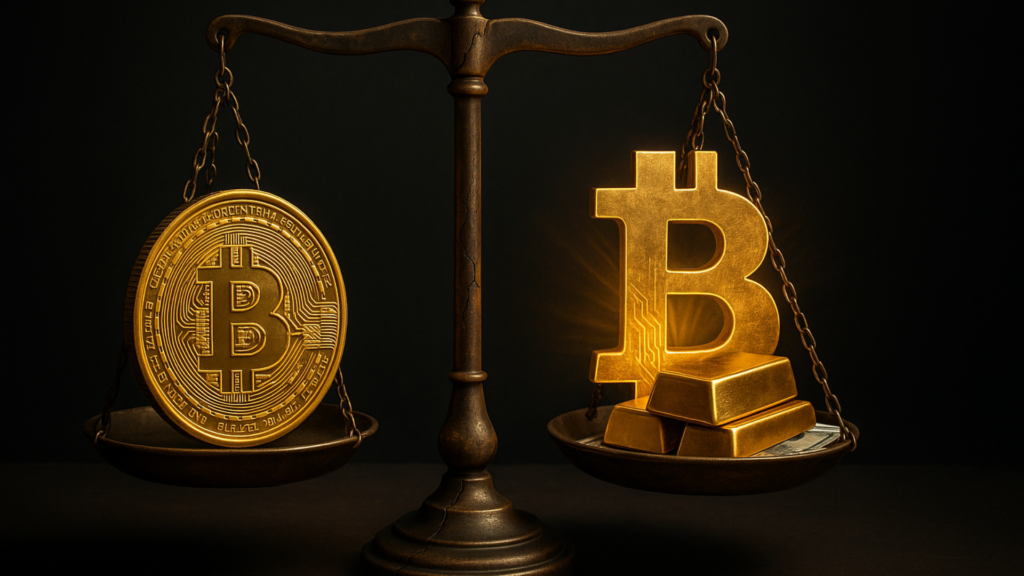
To understand why people believe Bitcoin lacks intrinsic value, it’s important to examine how traditional finance defines “value.” Intrinsic value, in classic economic theory, typically refers to the fundamental worth of an asset based on tangible properties such as cash flow, utility, or backing by physical goods. A company’s stock has value because it represents ownership in a revenue-generating entity. A government bond holds value because it pays interest. Gold, often cited as a comparable asset to Bitcoin, has value due to its use in electronics, jewelry, and historical role as money.
Signup on Bybit and receive 100USDT as welcome bonus
Bitcoin, by contrast, generates no cash flow, pays no dividends, and isn’t used in industrial processes. It exists solely as a decentralized digital ledger maintained by a global network of nodes. For critics, this makes Bitcoin an empty shell, with its price entirely dependent on what someone else is willing to pay. From this perspective, Bitcoin is no more valuable than a rare Pokémon card—interesting, perhaps, but ultimately arbitrary.
Scarcity as a Value Proposition
Supporters of Bitcoin often counter this criticism by pointing to its algorithmically enforced scarcity. Only 21 million bitcoins will ever exist—a stark contrast to fiat currencies, which can be printed in unlimited quantities. This programmed scarcity mimics gold’s limited supply and creates an environment where value can theoretically increase as demand rises. Proponents argue that scarcity, in and of itself, is a form of intrinsic value, especially in a world plagued by inflation and central bank overreach.
The concept of “digital gold” is at the heart of this argument. Like gold, Bitcoin is difficult to produce (through mining), highly portable, and resistant to confiscation. However, Bitcoin improves on gold in terms of divisibility, ease of storage, and transferability. For many, these attributes justify viewing Bitcoin as a store of value in the digital age—even if it doesn’t fit neatly into traditional asset categories.
Utility in Decentralization and Trustlessness
Another major point of contention is Bitcoin’s utility. Detractors say it’s useless for everyday transactions, pointing to slow processing times and high fees during peak activity. While these concerns are not without merit, they often overlook the broader utility of Bitcoin as a censorship-resistant and decentralized currency. In countries with authoritarian regimes, where capital controls are strict and censorship is rampant, Bitcoin offers an escape route from financial oppression.
Signup on Bybit and receive 100USDT as welcome bonus
In economies with failing currencies—such as Venezuela, Zimbabwe, or Argentina—Bitcoin serves as a lifeline for citizens trying to preserve their wealth. The fact that Bitcoin does not rely on banks or governments gives it a unique utility: it allows people to move value across borders, access financial services without permission, and engage in trade without interference. This kind of financial freedom, though difficult to quantify, carries real-world significance, especially for those underserved by traditional systems.
The Role of Speculation and Market Psychology
Despite its growing utility, it’s undeniable that speculation plays a significant role in Bitcoin’s price action. Like tech stocks or commodities, Bitcoin’s market value often moves on sentiment, narratives, and hype cycles. This speculative nature fuels the perception that Bitcoin is a bubble waiting to burst. Media coverage that emphasizes price volatility, sensational gains, and sudden crashes reinforces the idea that Bitcoin lacks substance.
Yet speculative value doesn’t necessarily negate real value. Every market, from housing to equities, contains speculative elements. What matters is whether underlying use cases justify long-term investment. In Bitcoin’s case, while speculation drives short-term behavior, long-term adoption trends—from corporate treasuries to sovereign interest—suggest a maturing asset class. Its decentralized infrastructure, limited supply, and evolving ecosystem provide more than just speculative appeal.
Institutional Adoption and Changing Perceptions
In recent years, institutional interest in Bitcoin has challenged the narrative of it being a worthless digital token. Major financial firms such as BlackRock, Fidelity, and JPMorgan have launched or endorsed Bitcoin-related products, including ETFs and custody services. Payment platforms like PayPal and Square have integrated Bitcoin purchases, and nations like El Salvador have adopted it as legal tender. These developments lend credibility to Bitcoin’s value proposition, especially in the eyes of skeptics.
Even central banks are exploring digital currencies, influenced in part by the success of Bitcoin and its underlying blockchain technology. While central bank digital currencies (CBDCs) differ in design and purpose, their rise signals a broader recognition of the digital asset space. Bitcoin’s ability to survive and thrive in the face of constant criticism—and without any central authority—is, in itself, a powerful testament to its perceived value.
Is Intrinsic Value Always Necessary?
The recurring claim that Bitcoin has “no intrinsic value” assumes that all value must be rooted in utility or tangibility. But history shows that many widely accepted assets don’t meet that standard. Fiat currencies, for example, have no intrinsic value—they are backed solely by government decree and collective belief. Art, collectibles, and even domain names derive their value from scarcity, recognition, and demand—not physical utility.
Bitcoin, by functioning as an independent monetary network, creates its own form of value—one based on decentralization, scarcity, and trustless operation. Whether or not that constitutes intrinsic value depends largely on how one defines the term. In a world increasingly reliant on digital infrastructure, perhaps our understanding of “value” needs to evolve as well.
Conclusion
The claim that Bitcoin has no intrinsic value remains one of the most persistent arguments against its legitimacy. Rooted in traditional economic thinking, it fails to account for the evolving ways in which people assign worth in a digital age. Bitcoin may not produce cash flows, but it offers utility, scarcity, and financial sovereignty—all of which are valuable to millions of users worldwide.
While the debate is unlikely to be resolved anytime soon, what’s clear is that Bitcoin has established itself as more than just a passing trend. Its growing adoption, institutional integration, and resilience over time suggest that value—intrinsic or not—is often in the eye of the beholder. Whether you’re a skeptic or a believer, one thing is certain: Bitcoin has changed how we think about money, and that alone makes it worth paying attention to.